

Blog
How Does Home Care Help Alzheimer’s Patients
Author: Cheryl McClure

Alzheimer's & Dementia Care

February 6, 2026
Feb
06
2026
When someone you love gets a Dementia diagnosis, you must make big decisions about their future. Nearly 6.9 million Americans live with this disease, and the number keeps growing. You want the best support for your family member, keeping their dignity and comfort in mind.
Professional in-home services provide a caring solution for those with Alzheimer’s and their families. It lets people stay in places they know, feeling safe and connected to their memories.
The Alzheimer’s Association says quality support means a range of services at home. This helps family caregivers who often feel too much stress. Specialized help meets the unique needs at each stage of Alzheimer’s, from early signs to more serious needs.
At You’re First Home Care in Houston, Texas, we know living with Alzheimer’s means changing needs and keeping independence. Our trained caregiving team offers specialized Alzheimer’s Care services that respects each person’s wishes.
Key Takeaways
- Professional in-home support lets dementia patients stay in familiar places, which often leads to better outcomes than living in institutions.
- Specialized services meet all needs at every stage of Alzheimer’s, from early memory challenges to more serious needs.
- Family caregivers get much-needed relief and help, reducing stress and ensuring their loved ones get expert care and safety.
- Personalized care plans keep dignity and quality of life by respecting individual preferences and routines in a comfortable setting.
- In-home assistance offers a compassionate middle-ground solution between independent living and residential facilities for seniors with Alzheimer’s disease.

Understanding In-Home Care Services for Alzheimer’s and Dementia Patients
Learning about in-home care for Alzheimer’s and dementia helps families make better choices. Home care services offer medical help, daily tasks, and emotional support. This way, your loved one stays in a familiar place while getting professional help.
In-home care is different from living in a care facility. You have more control over the care schedule and environment. This is very helpful as Alzheimer’s progresses and needs change.
Types of Specialized Home Care Services Available
The Alzheimer’s Association lists four main types of in-home care. Each type serves a specific purpose and can be combined for full support.
Companion services offer supervision, social interaction, and activities. They help reduce isolation and keep your loved one mentally active. A companion caregiver ensures safety and emotional well-being.
Personal care services help with daily tasks like bathing and dressing. These services are given with respect and dignity. They help your loved one stay independent. They should also provide Companionship.
Homemaker services keep the home clean and organized. This includes housekeeping, laundry, and meal preparation. A clean home reduces confusion and supports daily functioning.
Skilled care brings medical expertise to your home. It includes wound care and medication management. This ensures complex medical needs are met without facility placement.
| Service Type | Primary Functions | Professional Provider | Best Suited For |
| Companion Services | Supervision, social engagement, recreational activities, safety monitoring | Trained companion caregivers | Early to moderate dementia stages requiring social stimulation |
| Personal Care Services | Bathing, dressing, grooming, toileting, eating assistance, mobility support, companionship | Certified home health aides | Moderate dementia with declining ability to perform daily tasks |
| Homemaker Services | Housekeeping, laundry, shopping, meal preparation, household organization | Homemaker aides | All dementia stages requiring household maintenance support |
| Skilled Care Services | Medication management, wound care, injections, therapy, health monitoring | Licensed nurses and therapists | Patients with complex medical conditions in addition to dementia |
Creating a Personalized Care Plan in a Familiar Environment
Effective dementia care starts with a thorough assessment and personalized plan. The National Institute on Aging says care planning should focus on routines and abilities. This ensures care adapts as needs change.
A personalized care plan considers many factors. These include the type of dementia, disease stage, medical conditions, and personal history. This approach ensures care aligns with your loved one’s needs.
Home offers significant advantages for dementia patients. They stay surrounded by familiar things and routines. This comfort reduces confusion and supports better functioning. Change is difficult for any individual living with Dementia.
Care plans evolve as Alzheimer’s progresses. You work with caregivers to adjust services and approaches. This ensures your loved one gets the right care at every stage.
Role of Professional Caregivers and Home Health Aides
Professional caregivers bring specialized knowledge to dementia care. They understand the challenges of memory loss and behavioral changes. Their expertise ensures compassionate support.
Effective caregivers use specific communication skills for memory-impaired individuals. They simplify instructions, use redirection and visual cues. This reduces anxiety and supports abilities.
Home health aides also observe subtle changes that may indicate health issues. They monitor eating, mood, and medication side effects. Early detection leads to timely medical intervention. Professional caregivers also support families. They offer respite and share insights about disease progression. This partnership ensures complete care for your loved one and family.
At You’re First Home Care in Houston, our caregivers receive ongoing training. We match caregivers with families based on personality and experience. This creates trusted relationships that benefit everyone.
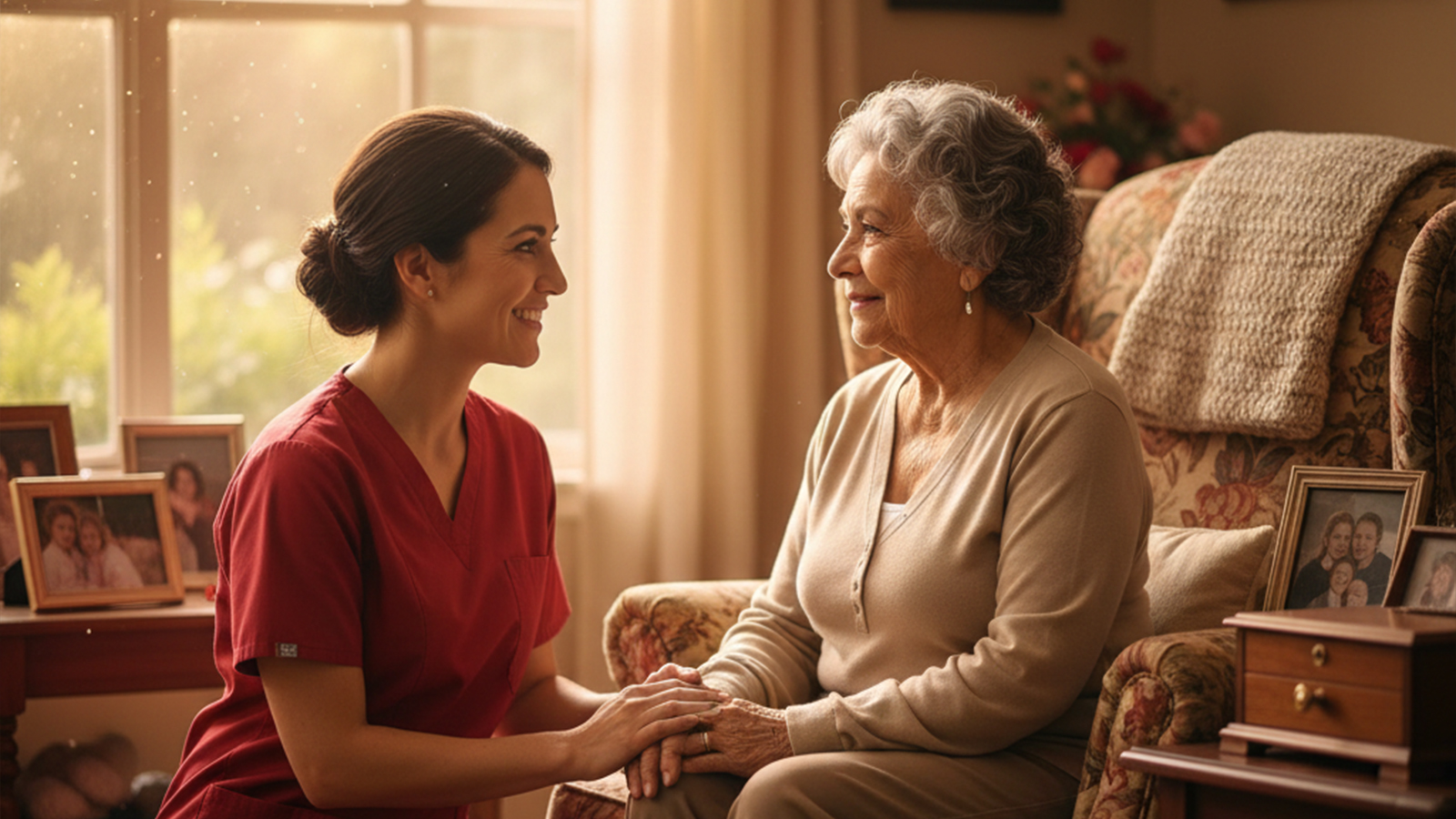
How Does Home Care Help Alzheimer’s Patients Maintain Quality of Life
Home care makes a big difference in the daily lives of Alzheimer’s patients. It goes beyond basic help to include physical, emotional, and social support. Choosing professional in-home care means your loved one gets the support they need while staying in a familiar place.
Each person with Alzheimer’s is unique, with their own values and history. Caregivers focus on what matters most to your loved one. This creates a care experience that feels natural and respectful.
The National Institute on Aging suggests keeping routines for daily activities. This helps reduce confusion and anxiety. It also lets people function at their best.
Supporting Daily Activities and Personal Care Needs
Professional caregivers help with daily tasks like bathing, dressing, nutrition, and cognitive stimulation. They do these tasks with sensitivity and respect for personal preferences.
Your loved one gets to make choices and stay independent. Caregivers establish routines that create a sense of security. This predictability helps reduce confusion and agitation.
Personal care support includes several key elements that preserve autonomy:
- Using adaptive equipment that compensates for declining abilities
- Respecting preferences regarding clothing choices, food selections, and daily schedules
- Offering choices within safe parameters to maintain decision-making opportunities
- Adjusting assistance levels as abilities change over time
- Communicating with gentle, respectful language that validates feelings
This approach helps individuals maintain their identity and self-worth. Caregivers focus on what your loved one can do, not just what they can’t. They plan activities that the person enjoys, creating positive experiences.
Ensuring Safety and Supervision in the Home Environment
Professional care providers create secure surroundings that prevent accidents while maximizing independence. Safety in the home environment requires ongoing assessment as Alzheimer’s progresses. What works today may need adjustment tomorrow as abilities change.
Caregivers take steps to make the home safer by implementing multiple protective measures. They remove hazards that could cause falls or injuries. Good lighting throughout the house helps your loved one navigate safely, even at night when confusion often increases.
Comprehensive safety measures include:
- Fall prevention through environmental modifications like removing throw rugs and installing grab bars
- Wandering prevention with supervision and monitoring systems that alert caregivers
- Kitchen safety to prevent burns or other cooking-related injuries and items that could be dangerous to the person
- Medication security to prevent accidental overdoses or missed doses
- Continuous assessment of changing safety requirements as dementia advances
Compassionate supervision provides security without feeling restrictive or institutional. Your loved one can move freely within their home while caregivers maintain a watchful presence. This balance between freedom and safety helps Alzheimer’s patients need feel comfortable and secure.
Professional caregivers understand that each person presents unique safety challenges. They customize supervision strategies based on individual behaviors and risk factors. You’ll appreciate how they create protection that respects your loved one’s dignity and independence.
Offering Respite Care and Support for Family Caregivers
Caring for someone with Alzheimer’s impacts the entire family emotionally and physically. Professional respite care gives family caregivers essential breaks to rest, attend to personal needs, or maintain employment. The National Institute on Aging emphasizes that caregivers need support too, including respite services, support groups, and time for self-care.
You cannot provide quality care if you’re exhausted and overwhelmed. Respite care prevents caregiver burnout by ensuring you have time to recharge. This support preserves your health and well-being, which ultimately benefits your loved one.
Support services for family caregivers deliver multiple benefits:
- Reduces stress-related health problems in family members
- Strengthens family relationships by reducing tension and conflict
- Allows primary caregivers to maintain work and social connections
- Provides emotional relief knowing your loved one receives professional attention
- Improves overall care quality by keeping primary caregivers healthy and engaged
Comprehensive care management includes supporting both the patient and their family support system. Professional caregivers understand that your family’s well-being directly affects your loved one’s quality of life. They work as partners with your family, not replacements for family involvement.
You’ll find that regular respite breaks help you appreciate the time you spend with your loved one. When you’re rested, you can focus on meaningful connection. This balance creates more positive experiences for everyone involved in the care journey.

How You’re First Home Care is Houston’s Choice for Alzheimer’s In-Home Care.
You’re First Home Care is a top choice in Houston for Alzheimer’s care. We have years of experience and a deep understanding of dementia care. Families trust us because we go beyond basic care.
Our caregivers get special training in dementia care. This training helps us manage Alzheimer’s challenges. We know how to handle behavioral changes and communicate with those who have memory loss.
What makes You’re First Home Care stand out is our focus on building relationships. We get to know each person’s history and preferences. This makes individuals feel safe and understood, even as their memory fades.
Caring for someone with dementia is more than just doing tasks. It’s about understanding the emotional journey. You’re First Home Care gets this and supports the whole family.
We offer services that let your loved ones stay in their own homes. The care adapts as the disease progresses. We always treat the person with dignity and respect.
Houston families benefit from You’re First Home Care’s local knowledge. We know about community resources and help seniors stay at home. We also understand Texas laws and insurance, making things easier during tough times.
When you need help, you want guidance. Finding the right care requires careful thought. Use tools like Medicare’s Home Health Compare and local Alzheimer’s chapters to help.
Choosing the right care involves several steps. Interview caregivers in your home and check their references. Make sure they have the right training and are available when needed.
| Selection Criteria | What to Verify | Why It Matters | How You’re First Home Care Delivers |
| Specialized Training | Dementia-specific education beyond basic certification | Alzheimer’s care requires unique skills standard training doesn’t cover | Extensive dementia care training for all team members with ongoing education |
| Background Screening | Criminal checks, references, and professional credentials | Your loved one’s safety depends on trustworthy caregivers | Comprehensive ongoing screening process including background checks and reference verifications |
| Consistency of Care | Same caregivers regularly, backup coverage plans | Familiar faces reduce confusion and anxiety for dementia patients | Dedicated caregiver assignments with reliable backup systems |
| Local Knowledge | Understanding of community resources and regulations | Access to Houston area specialists and support services | Deep Houston community roots with connections to local resources |
Share your loved one’s story and preferences with caregivers. This helps them provide meaningful care. It also helps them connect on a personal level.
Choosing the right care is a big decision. You’re First Home Care is here to support you. We help families spend quality time together and maintain a good quality of life.
The team at You’re First Home Care is dedicated to Houston families. We reflect the diversity and values of the community. We believe in honoring each person’s unique story and needs.
Conclusion
Research from the National Institutes of Health shows that families providing in-home support experience better outcomes. This is compared to those relying solely on facilities outside the home. While there is currently no cure for Alzheimer’s or any type of dementia, the level of care impacts daily life.
Your home may be the safest, most comforting place for your senior loved one. Professional support at home helps keep routines that preserve dignity and independence. This care is available through all disease stages, including end-of-life care, when familiar surroundings are most important.
Care for dementia patients requires specialized knowledge. With experienced professionals, caring for a loved one becomes more manageable. Social services and community resources add to direct care in the home, creating a strong support network.
Family members face a higher risk of burnout without proper assistance. You’re First Home Care offers care for dementia and support systems for caregiver wellbeing. Our Houston-based team provides personalized attention tailored to each senior’s specific needs.
Choosing professional care for a loved one shows wisdom and compassion. Contact You’re First Home Care today to discuss how our Alzheimer’s services can support your family. We aim to help you navigate this journey with confidence and support.

Previous Article
Let us know your interest
Reach Out


How Does Home Care Help Alzheimer’s Patients
When someone you love gets a Dementia diagnosis, you must make big decisions about their
Read More
Why Home Care is Preferred by Seniors
As people age, they must decide where and how they want to live. Many seniors
Read More

Common Myths About 24-Hour Home Care Services
When families think about 24-hour home care, worries and doubts come up. These feelings are
Read More
Is 24-Hour Care Better Than Assisted Living?
Deciding between 24-hour home care support and assisted living is tough. It impacts daily life, independence,
Read More

Need Help?