

Blog
How Home Care Helps Stroke Survivors Recover
Author: Cheryl McClure

Specialized Care

November 21, 2025
Nov
21
2025
Every year, around 795,000 Americans face a stroke. This life-changing event can happen to you or someone you care about. The good news is that 70% of survivors go back home after the hospital.
The American Stroke Association says the main goal is to get back to a normal life at home. Your journey post-stroke doesn’t stop at the hospital. Many survivors say the real challenge starts when they return home.
Understanding how home care helps stroke survivors recover is essential for families navigating this journey. Home care is key in patients with stroke recoveries, bringing support right to your door.
At You’re First Home Care in Houston, we provide professional support during this critical time. Before you go home, your hospital team checks a few things. We see if you can take care of yourself, follow your treatment, and communicate your needs.
We also check if you have support at home and if you can move safely. Post-stroke rehabilitation and care at home are comforting and familiar. Professional caregivers help you tackle daily challenges and celebrate small wins.
Key Takeaways
- About 795,000 Americans experience a stroke each year, with 70% returning home after hospital discharge
- The American Stroke Association emphasizes that returning home is the primary goal for all stroke survivors
- Stroke is the leading cause of long-term disability, affecting millions of people worldwide
- Home care services provide essential support for daily activities and medical needs following a stroke
- Hospital teams evaluate your ability to care for yourself, follow medical advice, and communicate before discharge
- Professional caregivers help stroke survivors rebuild independence in familiar surroundings
Understanding the Journey from Hospital to Home After a Stroke
Leaving the hospital after a stroke is a big step in your recovery. It depends on your health, how well you can move, and who supports you at home. Your healthcare team looks at many things to make sure you’re safe and have follow-up care when you go home.
Assessing Your Readiness to Transition Home for Stroke Care
Your doctors check if you can do simple things like eating and getting dressed. They see if you can use the bathroom safely. Your case manager talks to therapists to figure out what help you’ll need.
They want to know if you can move around safely and if you’ll need someone to help you at home. Your insurance will cover the care you need based on this.
Essential Home Modifications for Safety and Accessibility
Make your home safe to avoid falls and injuries. Remove throw rugs and clear your walkways. Put grab bars in the bathroom and handrails on stairs.
You might need to move furniture for wheelchair access or build a ramp. Always wear shoes with rubber soles indoors. And always check the bath water before getting in.
Alternative Care Settings When Home Isn’t Ready
Going straight home might not be the best choice. Your case manager can tell you about other places you can go for health care services. These places are covered by your insurance:
| Facility Type | Services Provided | Best For |
|---|---|---|
| Inpatient Rehabilitation | 3+ hours therapy daily, 5-6 days per week | Intensive recovery needs |
| Skilled Nursing | 24-hour nursing care, physician oversight | Complex medical needs |
| Nursing Facility | Ongoing medical supervision | Long-term health issues |
| Assisted Living | Help with meals, medication, housekeeping | Daily living support |
How Home Care Helps Stroke Survivors Achieve Successful Stroke Recovery
Recovering from a stroke takes time and effort. Home care services offer the support stroke survivors need to regain their independence. You can do this while staying in a place you know well. Stroke caregivers work with stroke survivors and caregivers to make a personalized recovery plan that meets their needs and goals. The caregiver becomes a trusted partner in your journey, providing personalized assistance every step of the way.
Personalized Care Plans Tailored to Your Recovery Goals
Your multidisciplinary care plan starts with what’s most important to you. It’s all about you with a person-centered approach. Your rehabilitation team will look at what you can do and make daily routines that challenge you just right. This way, you can reach your goals at your own pace.
Daily Living Support and Independence Building
With the right help, daily tasks become easier. Your caregiver will assist with daily activities and teach you to do things on your own. They’ll start with simple tasks and gradually increase them as you get better. This helps you become independent again and builds your confidence.
Medication Management and Medical Compliance
Following your medication schedule is key to avoiding setbacks. Home care services keep track of your medications and help you stay on schedule. Research shows that with professional help, 92% of stroke survivors take their medications correctly. This support ensures your loved one follows their doctor’s orders and attends all necessary appointments for rapid recovery.
The Role of Home Health Care Teams in Stroke Rehabilitation
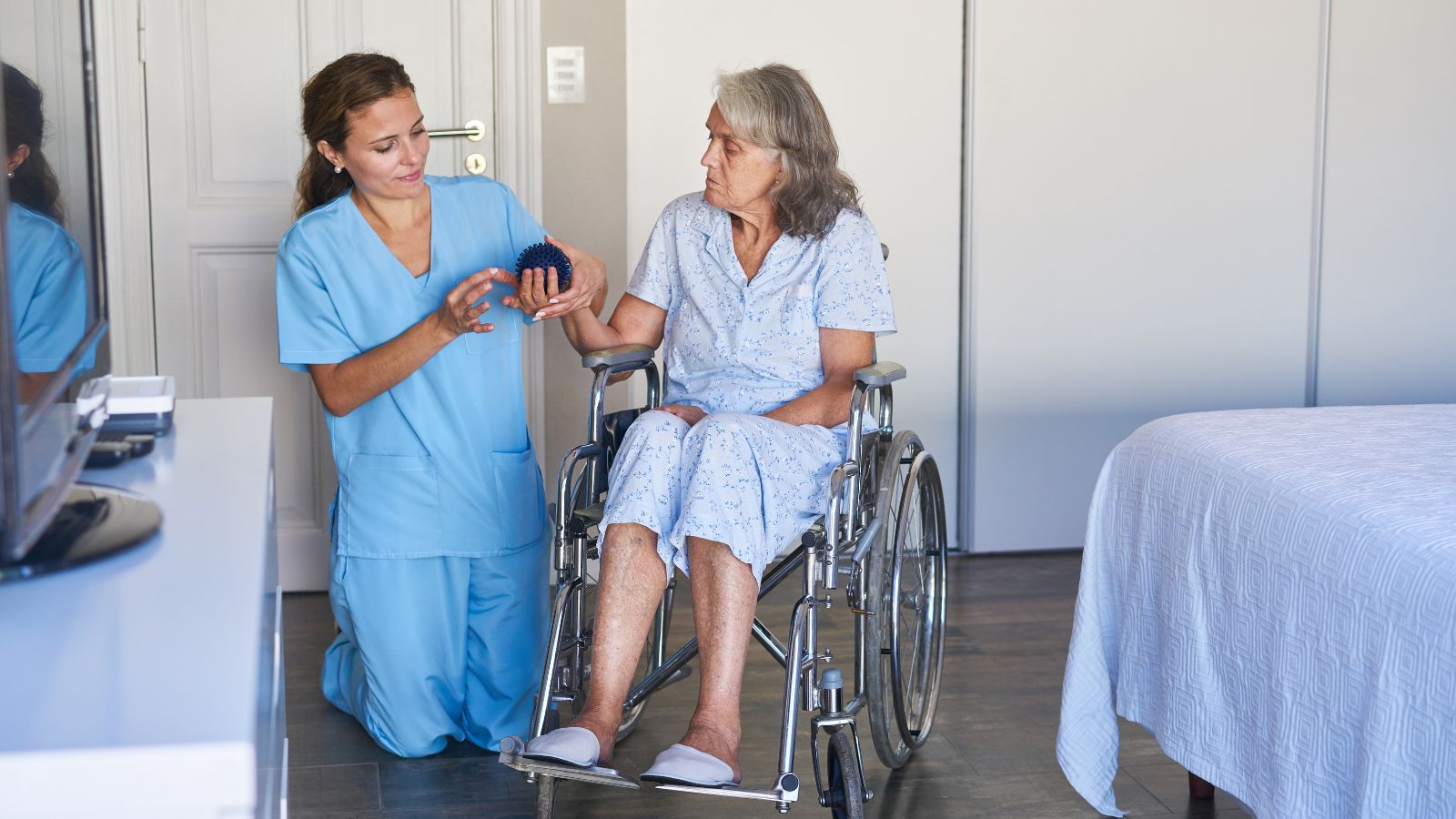
Recovering from a stroke needs a dedicated team working together. Each team member has special skills for different parts of your recovery. Knowing who they are and what they do helps you get the most from your long-term care at home.
Your primary care doctor works with specialists to make a detailed recovery plan. This plan ensures all parts of your recovery are covered. The best care happens when everyone talks about your progress and any challenges.
Your team meets often to talk about your progress and change your care plan. This teamwork ensures you get the right support for all your needs. It also avoids any confusion or extra work.
Physical and Occupational Therapy in Your Home Setting
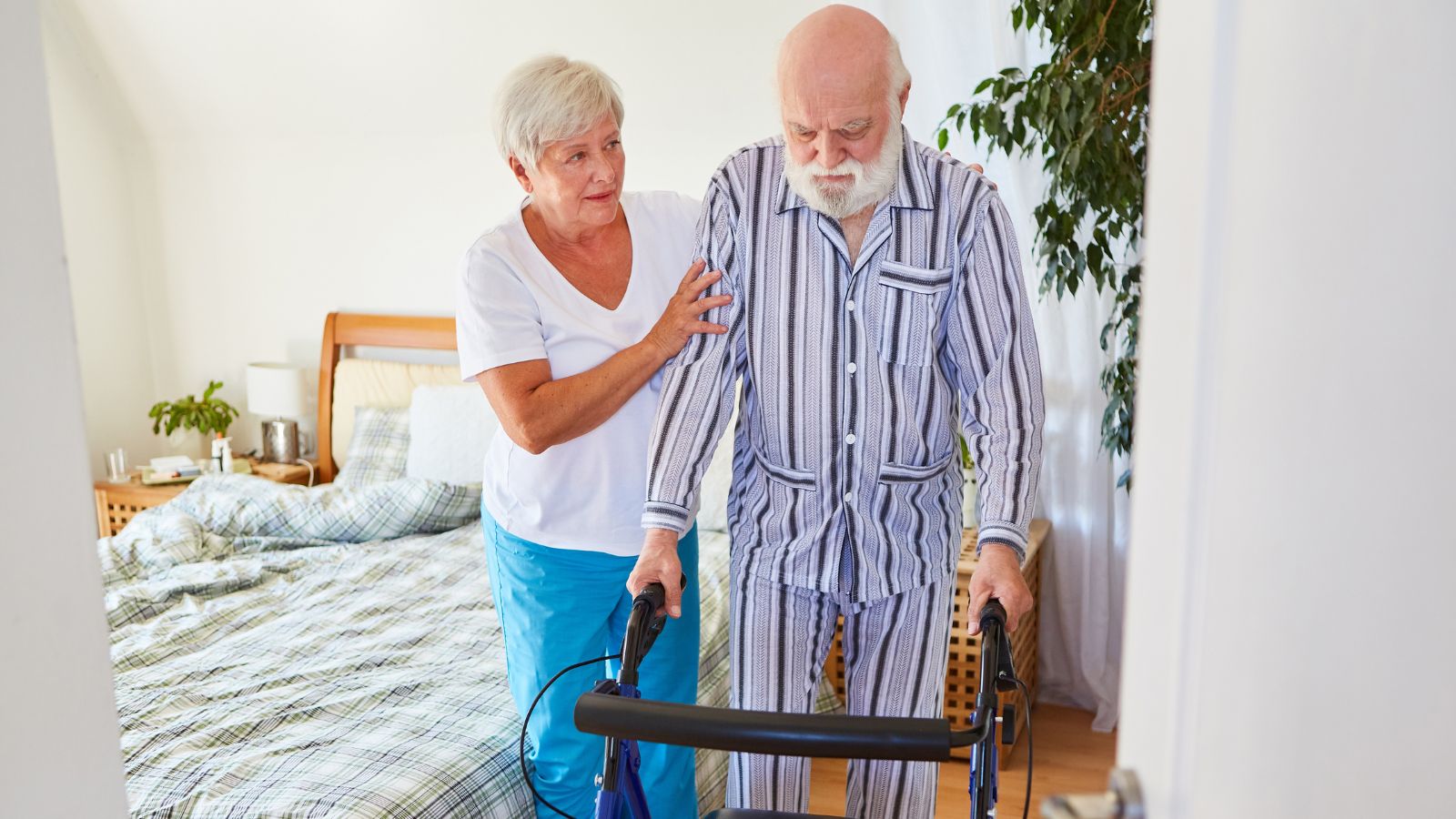
Rehabilitation at home can be as effective as in a clinic. An occupational therapist works with you in your home. This makes learning new skills easier and faster and helps people recover quickly.
Motor Skill Exercises and Mobility Training
Physical therapy starts with strengthening muscles. You’ll do exercises for walking, balance, and swallowing. Your therapist will teach you to use aids like walkers and wheelchairs.
An ankle brace might help if your muscles are weak. You’ll practice every day to get stronger.
Range-of-Motion Therapy and Constraint-Induced Techniques
After a stroke, muscles can get tight. Range-of-motion exercises help loosen them. Constraint-induced therapy is unique. It restrains your stronger arm to use your weaker one.
This method helps your brain reconnect with weak muscles. It speeds up recovery.
Technology-Assisted Recovery Methods
Modern therapy uses new tools. Functional electrical stimulation strengthens muscles. Robotic devices help with repetitive motions.
Virtual reality games make therapy fun. Activity monitors track your progress. They keep you motivated all day.
Activities of Daily Living Retraining
Your occupational therapist focuses on daily skills. You’ll practice dressing, bathing, and household chores at home. These sessions help you become more independent.
| Daily Activity | Therapy Focus | Recovery Timeline |
|---|---|---|
| Dressing | Button manipulation, zipper use | 2-4 weeks |
| Bathing | Safe transfers, grip strength | 3-6 weeks |
| Eating | Utensil handling, swallowing | 1-3 weeks |
| Cooking | Kitchen safety, meal prep | 4-8 weeks |
Cognitive and Emotional Support Through Home Care Services
Recovering from a stroke is not just about physical health. Your mind and emotions also need care. Home care services offer vital support for your thinking and emotional well-being. They help you regain your mental strength and cope with the emotional challenges of a stroke.
Learn More: What Are The Different Types of Companion Care Services Available?
Speech Therapy and Communication Recovery
Speech therapy is key to getting your communication back. Your therapist works on speaking, listening, writing, and understanding. These sessions strengthen your speech muscles and improve your comprehension.
Many stroke survivors see quick progress with regular practice at home.
Memory and Problem-Solving Skill Development
Cognitive rehabilitation focuses on your thinking skills. Your care team helps you with:
- Memory exercises to improve recall
- Problem-solving activities for daily challenges
- Judgment and safety awareness training
- Social skills practice for better interactions
Psychological Support and Caregiver Resources
Your emotional health is crucial for recovery. Professional counselors help you manage feelings and find coping strategies. Support groups connect you with others who understand your journey.
The American Heart Association offers resources for stroke nursing through its Support Network. This provides connections and information for the rehabilitation process.
Support for family caregivers is also vital. Quality rehabilitation programs like nurse-led telephone patient assessments teach skills and offer guidance. Creative arts activities help both survivors and caregivers express themselves and reduce stress.
Building Your Support Network with Professional Caregivers
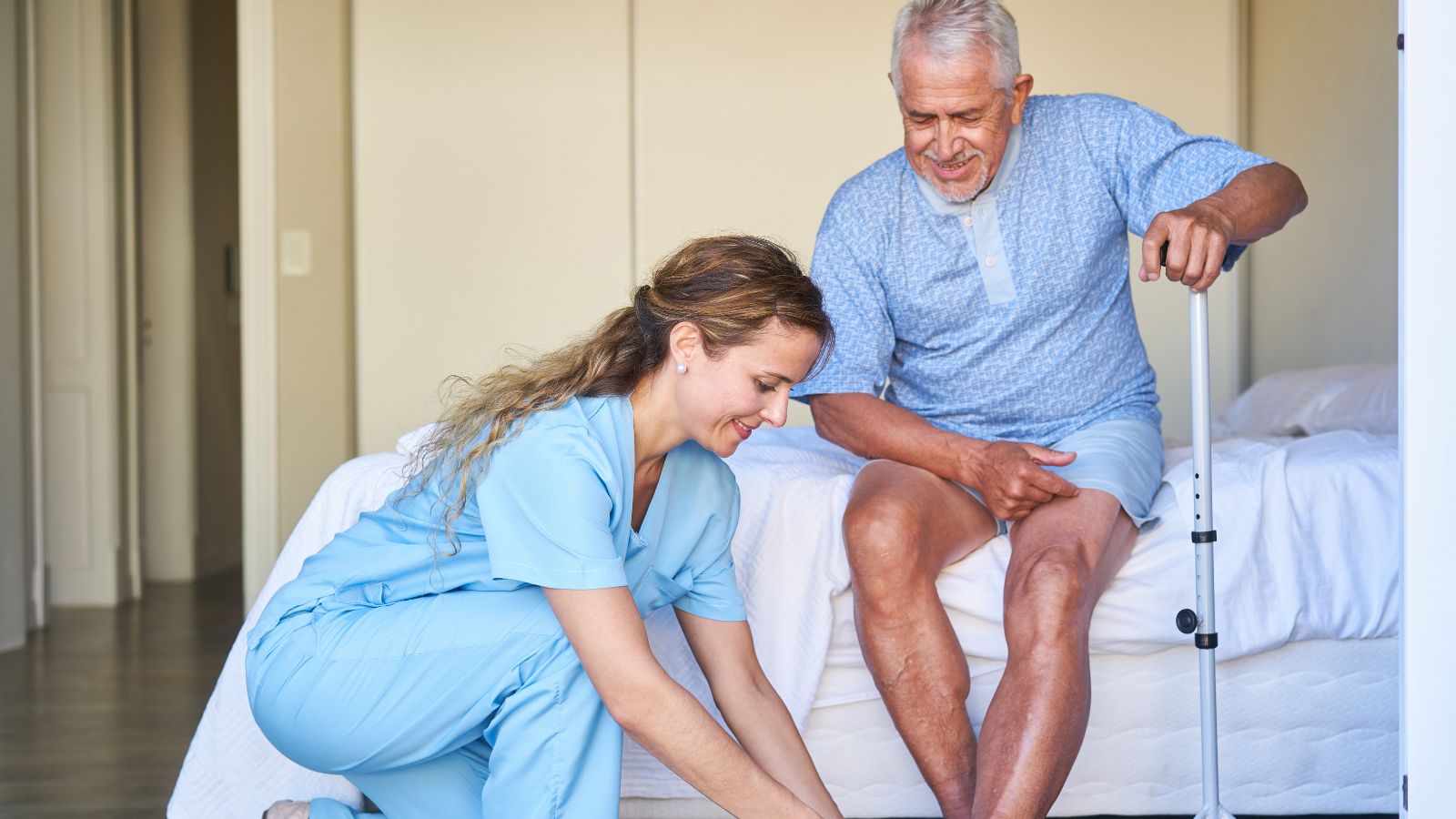
Having a strong support system is key when your loved one gets services for stroke recovery care at home. Almost 70% of stroke survivors go back to family members who are not ready for the challenges. Working with professional caregivers gives you the confidence and resources you need.
Learn More: Family Caregiver Training Services
Your support team starts with connecting different care services. Community health workers and nurses help you connect with healthcare systems. They guide you through available programs and help you find services your family qualifies for.
Conclusion
At You’re First Home Care, we understand that your journey to recovery after a stroke is deeply personal and filled with unique challenges. Every day, we see firsthand how the right support system transforms recovery outcomes for stroke survivors throughout Houston and the surrounding areas.
Research consistently shows what we witness in our clients’ homes: focused rehabilitation programs combined with personalized home care services produce the best results. When you receive therapy and support in your own familiar environment, you’re not just recovering—you’re rebuilding your life with dignity and independence.
Our professional caregivers work alongside your rehabilitation team to ensure you have consistent support during those critical first weeks and months when you’ll see the most improvement. But we’re also here for the long term, because we know that meaningful recovery continues well beyond the initial months. Studies from Johns Hopkins Medicine confirm that stroke survivors can continue improving their abilities 12 to 18 months after their stroke with dedicated therapy and support.
Whether you need assistance with daily activities, medication management, therapy support, or simply a compassionate caregiver who understands your recovery goals, You’re First Home Care is here to help. We believe that with the right support, you can achieve the independence and quality of life you deserve—all in the comfort and familiarity of your own home.
If you or a loved one is navigating stroke recovery, we invite you to contact us to learn how our personalized home care services can support your journey toward recovery and independence.
Frequently Asked Questions
How soon after a stroke can rehabilitation services begin at home?
You can start home care once you’re stable and leave the hospital. Inpatient rehab starts quickly after a stroke. Home care begins right after you go home. Your team will make sure care keeps going smoothly from the hospital to your home.
What types of healthcare providers make up a home care team for stroke survivors?
Your team includes many specialists. Physical therapists help with moving. Occupational therapists teach daily skills. Speech therapists work on talking and swallowing.
Will insurance cover home care services after surviving a stroke?
How can family caregivers get support while caring for stroke patients at home?
What home modifications are essential to help prevent another stroke and ensure safety?
How long does the stroke recovery process typically take with home care?
What daily activities can home care services help stroke survivors with?
How do I know if transitioning from hospital to home is the right choice versus an inpatient rehabilitation facility?

Previous Article
Let us know your interest
Reach Out
How Does Home Care Help Alzheimer’s Patients
When someone you love gets a Dementia diagnosis, you must make big decisions about their
Read More
Why Home Care is Preferred by Seniors
As people age, they must decide where and how they want to live. Many seniors
Read More
Common Myths About 24-Hour Home Care Services
When families think about 24-hour home care, worries and doubts come up. These feelings are
Read More
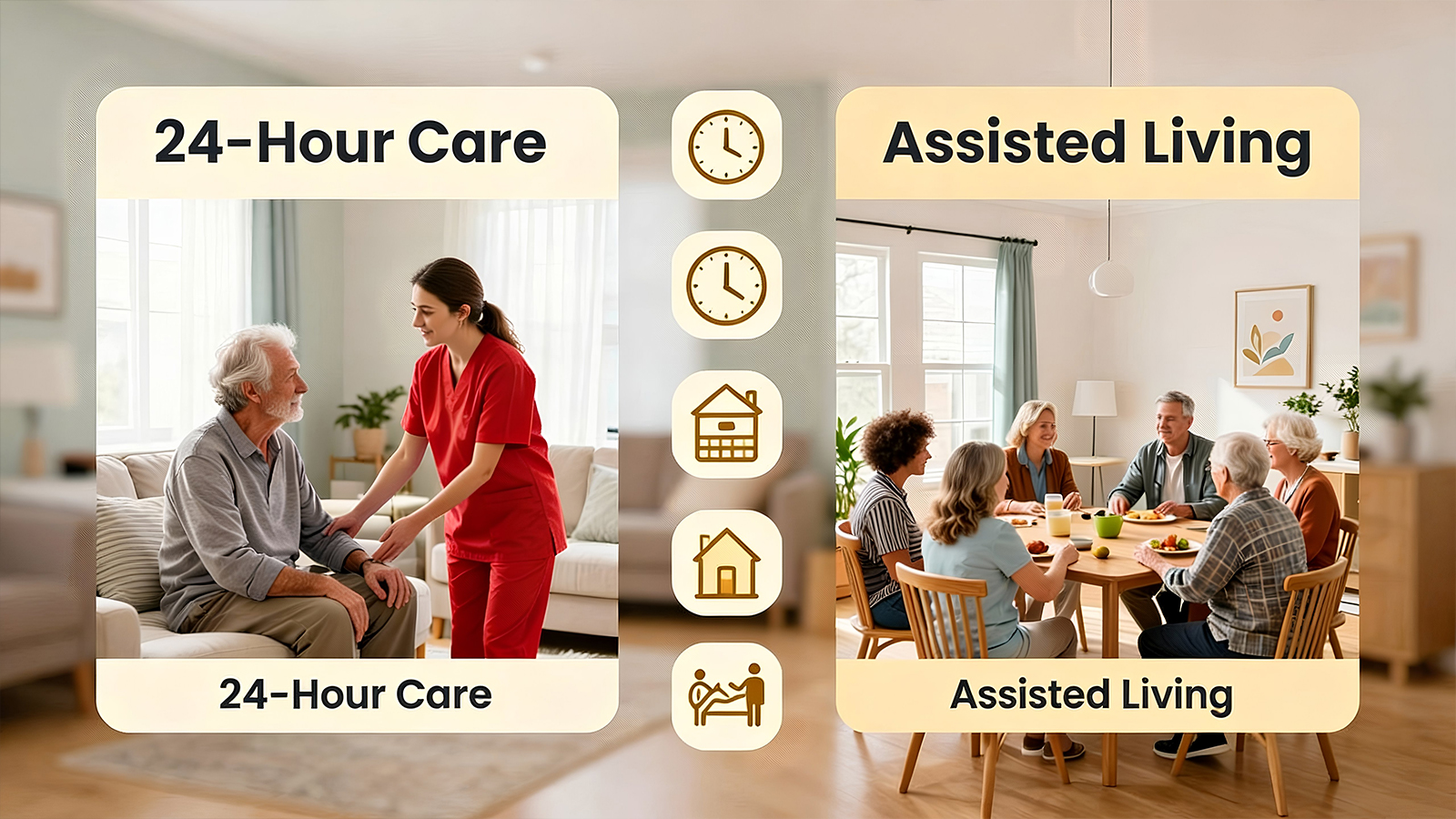
Is 24-Hour Care Better Than Assisted Living?
Deciding between 24-hour home care support and assisted living is tough. It impacts daily life, independence,
Read More
Need Help?